Community OT bundle for teams
Your senior OTs are too valuable to spend their clinical hours explaining grab rail standards and wheelchair basics on repeat.
Hand the foundational teaching over to us, and save their supervision time for complex clinical reasoning.
Six courses in assistive technology and minor home modifications, built by three practising OT clinician educators, with a competency checklist your supervisors sign off.
The problem
Your new grads will do their first home visit either way.
How well equipped they are for it is down to how you train them, and right now that training is coming out of your seniors.
Your seniors supervise between appointments. The same conversation about wheelchair prescription happens with four different grads across the year, and in a busy month it happens twice in a week.
That is your most expensive and least replaceable clinical time, spent covering material that does not change. Foundational teaching is repeatable by definition, so it can be delivered once, consistently, to everyone, at a fraction of what it costs to deliver live over and over.
Which leaves your seniors free for the part that cannot be scaled. The one-to-one coaching, the judgement calls, and the complex cases where their experience actually earns its rate.
If you employ community OTs, some of this will be familiar.
A senior OT talks a grad through commode prescription. Two weeks later, a different grad, the same conversation.
A referral sits in the allocation queue because nobody is quite sure the newer clinician is ready for it.
Someone comes back from a two-day workshop and their reports read exactly as they did before they went.
You are asked how you knew a clinician was competent to make a recommendation, and the honest answer is that they seemed fine.
None of that is a training problem on its own. It is what happens when foundational teaching has no structure behind it.
What it is
Every community OT needs the basics of AT and minor home mods.
Each course works through a case study, so your clinician sees the reasoning assembled rather than the components on their own.
Whether your caseload is aged care or disability, rails and ramps come up constantly, and so does the handful of equipment items that appear on nearly every referral. These are the things a clinician has to be able to handle before they can be useful to you on their own.
We don't teach products and funding rules, because those change constantly and your team can look them up. We teach a repeatable process, so a grad can work through a referral they have never seen before and arrive somewhere defensible.
The home modifications course works from the Person-Environment-Occupation model. The AT courses follow Natasha Layton's eight-step AT best-practice framework, stripped back to fundamental OT process. Your clinicians learn why they are prescribing what they are prescribing, which is the part that transfers to the next referral.
Minor home modifications
Grab rails, handrails and basic ramps. Measuring, the relevant standards, knowing when a minor mod stops being minor, and how to write for a builder.
Standard manual wheelchairs
Matching the chair to the person, the environment and the activities that matter, so community access is restored safely.
Mobility scooters
Route assessment, cognitive capacity and trials using standardised tools, with individual and community safety front of mind.
Recliner chairs
How to stop over-prescribing and under-prescribing, and choose a chair that works now and in two years, with clear justification.
Beds and mattresses
Pressure care management, electric profiling functions and risk assessment, covered in one course.
Mobile shower commodes
Task analysis to understand how the client will actually use it, so the choice supports safety, function and independence.
Thirteen hours of CPD, from $447 a seat.
See pricing for your teamOnboarding Pathway
Your clinicians get the training. You get a competency checklist.
On the Onboarding Pathway, every course maps to a written checklist your supervisor works through with the clinician against a real case from your own caseload, using the same five-level scale a hospital would use. The Six Course Bundle includes the courses and resources, without the checklist.
Learn
Structured self-directed learning with clinical reasoning guides, done when the clinician actually needs it rather than on a fixed group training day.
Plan
The clinician plans a real referral from your caseload using the reasoning guide, and brings it to supervision.
Apply
They do the assessment, prescribe the solution and follow up the outcome.
Sign off
The supervisor rates competency against the checklist, dates it and signs. Then you both know where they sit.
At the end you have a document that says, specifically, what this clinician can do unsupervised and what they can't.
The checklist maps to the OTA capability frameworks for assistive technology, environmental and home modifications, and aged care, so the levels line up with how the peak body describes foundational practice.
OTA is explicit that this part sits with employers:
Supervisors and employers have a responsibility to provide adequate support and training to their supervisees and staff, ensuring clear risk mitigation and support strategies are adopted.
Occupational Therapy Australia, Capability Framework for occupational therapists supporting people with environmental and home modifications, 2025
The maths
But isn't a full day of in-person PD better?
per PD hour in course fees, against $117 to $164 in registration alone for a day in person
Short answer, no. Not on value for money, and not on the learning. Start with the cost.
A full day isn't a full day. Take out registration, three breaks and the last session nobody is really in, and you're at about five hours. Add travel either side and anyone outside a capital city loses a day and a half.
The accounting is worse than the ticket price suggests. Whether your clinician does it on work time or their own, they aren't seeing clients that day, so you wear the lost billing either way.
| One OT, one day in person | One OT, this bundle | |
|---|---|---|
| Registration | $585 to $820 | Included |
| Travel and accommodation | Varies, often more than the ticket | Nil |
| Time out of the diary | A full day, more with travel | Self-paced, fits around caseload* |
| PD hours actually received | Around 5 | 13 |
| Ticket cost per PD hour | $117 to $164 | $32 to $36 |
| What you have afterwards | A certificate of attendance | A signed competency checklist |
* Because it’s online and self-paced, the 13 hours can be spread across a timeframe that suits good learning and your team’s caseload, or built into onboarding time.
Registration figures are OT Exchange 2026 published day
rates. Cost per PD hour compares ticket prices only, registration against the seat price. The bundle figure depends on team size.
Then there's the learning. Pack a year of foundational clinical reasoning into one day and you are asking your team to absorb more than anyone can hold. By mid-afternoon retention drops, and most of what you paid for is gone before they are back in the office.
Spaced learning is one of the most robust findings in educational research. Thirteen hours broken into modules means a clinician can learn a concept in a gap in their week, use it on a real client that afternoon, and bring their reasoning to supervision the next morning. That is what turns training into practice rather than an event everyone attended.
Pricing
Per seat, twelve months access.
All prices are in Australian dollars and include GST. Bought one at a time, the six courses come to $622.
- Six courses, 13 hours of CPD
- Downloadable resources
- NDIS and aged care funding module
- Certificates and CPD reflection forms
- Completion reports on request
- Learning flowchart
- Competency sign-off for clinical supervisors
- Capability mapping against the 2025 OTA frameworks
- Quarterly implementation session for supervisors*
Buying for two to four clinicians? Ask us for an invoice.
- Six courses, 13 hours of CPD
- Downloadable resources
- NDIS and aged care funding module
- Certificates and CPD reflection forms
- Completion reports on request
- Learning flowchart
- Competency sign-off for clinical supervisors
- Capability mapping against the 2025 OTA frameworks
- Quarterly implementation session for supervisors*
* Four sessions a year for the supervisors and clinical leads running the pathway, each an hour with Clare, Angie or Lauren on a set day and time. Bring your questions about using the learning flowchart, competency sign-off and capability mapping with your team. These are group sessions, not one-on-one calls, and they don’t replace clinical supervision for your clinicians, which is available separately as an add-on.
Team pricing for the Onboarding Pathway
The Onboarding Pathway is sold to teams of five or more, and the discounts below apply to it only. The Six Course Bundle is already discounted at $447 a seat, so if you’re training one to four clinicians, or only want the courses, it’s the better fit.
| Seats | Discount | Per seat (inc. GST) | Your team pays (inc. GST) |
|---|---|---|---|
| 5 to 9 | 10% off | $474 | $2,370 to $4,266 |
| 10 to 19 | 15% off | $448 | $4,480 to $8,512 |
| 20 to 49 | 20% off | $422 | $8,440 to $20,678 |
| 50 or more | Talk to us | Custom |
The discount applies to every seat once you cross the threshold, so ten seats is priced at $448 each rather than the first nine at $474. Ten seats costs about what you would spend sending one and a half clinicians interstate for two days.
Add-on, priced separately. Supervision hours with any of the three educators.
Meet your educators
Three occupational therapists built these courses.
Between us we have more than fifty years of clinical experience, experience teaching occupational therapy in a university setting, and we provide external supervision and support to teams around Australia. All three of us educate, train and supervise OTs, so we have sat where you are sitting and wondered whether the training we were paying for was doing anything.
That combination is unusual. Most OT training is built by educators who left clinical work, or by clinicians who have never taught. This was built by people doing both, which is why it arrives with a competency checklist instead of a certificate.
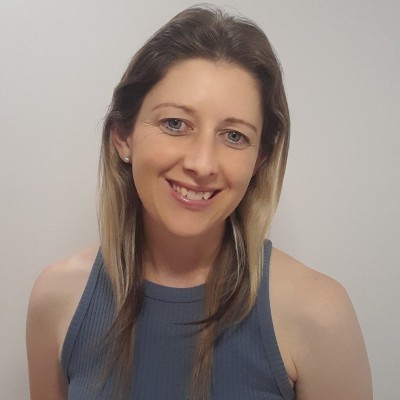
Clare Batkin
Clare is a proud, self-confessed OT nerd with over 17 years of experience across the public and private sectors. Her mission is to strip back complex, overwhelming concepts, helping community clinicians confidently bridge the gap between university theory and real-world daily practice. She is deeply passionate about supporting students and new graduates as they navigate the transition into community-based work.
Clare is a double finalist at the 2026 Allied Health Awards, for Occupational Therapist of the Year and Allied Health Educator Excellence.
Within this bundle, Clare teaches the wheelchair, commode and recliner courses.
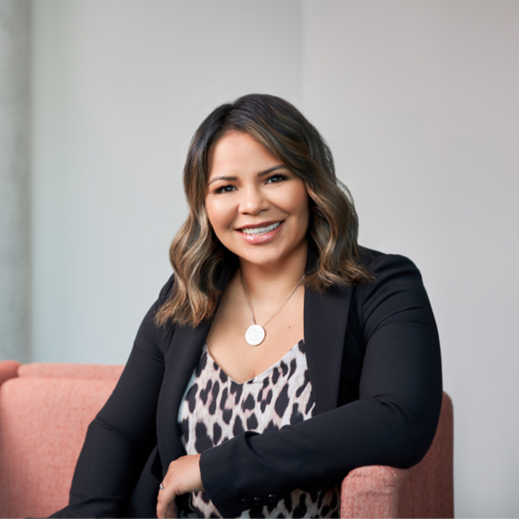
Angie Contreras
Angie has been a clinician for over 20 years across community and rehabilitation settings in Australia and Ireland, with expertise in complex home modifications for people living with MS, Parkinson's, MND, stroke, brain injury, dementia and spinal cord injury. She taught at the University of Sydney for more than eight years as a clinical educator, sessional academic and Associate Lecturer, and is a Fellow of the Higher Education Academy. She is an approved Complex Home Modifications assessor under the NDIS and one of twelve OTs nationally on the iCare Lifetime Care panel for building modifications. Angie teaches the minor home modifications course.
Lauren Hart
Lauren is an occupational therapist with 14 years of clinical experience and the founder of Optimal Living Therapy, a WA-based occupational therapy provider working across the NDIS and aged care sectors. Over more than a decade, she has built and led a team of OTs working extensively across assistive technology, complex disability, home modifications and community-based practice.
Lauren is also the co-founder of Otuition, which began as a way to better train and onboard her own team. After investing in professional development that didn't always translate into confident clinical practice, she wanted to build education that bridged the gap between knowing the theory and being able to apply it in a client's home. Lauren collaborates across Otuition's courses and teaches its mobility scooter, beds and mattresses, and funding principles content.
How your team learns it
The thing that turns a course into changed practice is whether it can be used straight away.
Each course is put together slightly differently, shaped around the equipment and the way that educator teaches. Across the bundle your team gets:
Video presentations
Roughly 1.5 to 2.5 hours per course, watchable in pieces.
Slides and full transcripts
To annotate and highlight, so nobody is scribbling instead of listening.
Clinical reasoning guides
They don't hand over an answer. They prompt the clinician to ask the client, and themselves, the right questions.
Measurement and assessment forms
Plus quick reference guides for the prescription process.
A generic AT report template
For writing short reports that still get funded.
Certificates and CPD forms
Completion certificates and reflection forms for AHPRA records.
Have a look at the platform first
Otuition accounts are free to set up. Create one, take the free Disability in Australia and NDIS Basics course, and judge the teaching before you spend anything on your team.
Create a free accountQuestions
How long do we have access?
Twelve months from purchase, for each seat.
What CPD does this count for?
Thirteen hours across the six courses. Ten hours across the five assistive technology courses, and three hours on minor home modifications. The Board requires 20 hours a year with at least five interactive. Certificates and CPD reflection forms generate automatically, so your team has what they need for an audit.
How do I know who has completed what?
Ask us for a completion report on anyone you have enrolled, whenever you want one, and we will send it through. On the Onboarding Pathway you also have the competency sign-off, which your own supervisors complete and hold.
Can a seat transfer if someone leaves?
No. A seat is assigned to an individual clinician and cannot be reassigned. It is worth factoring that in when you decide how many to buy and when to enrol people.
We already do internal supervision. Why would we need this?
This is not a replacement for supervision. It takes the foundational teaching off your supervisor's plate so supervision goes to clinical judgement instead of explaining commode features for the fifth time.
Our OTs are experienced, not new grads.
The courses are pitched at foundational practice, which OTA defines by knowledge and experience rather than years since graduation. An OT with ten years in hand therapy moving into community AT is a foundational practitioner in that area.
Will this cover everything they need?
No, and we would be wary of anyone who said it did. It is a strong foundation for adult clients with straightforward functional needs. Complex behavioural or postural presentations need more, and every recommendation should still be discussed with a supervisor.
We have never heard of you.
Fair. Otuition was built by a WA NDIS and aged care provider to train its own OTs, and the AT series is a collaboration with Your OT Tutor, which supports thousands of Australian OTs. Set up a free account, take the free NDIS Basics course, and judge us on the content.
Do you invoice?
Yes. ABN, GST invoice, purchase orders, standard terms.